
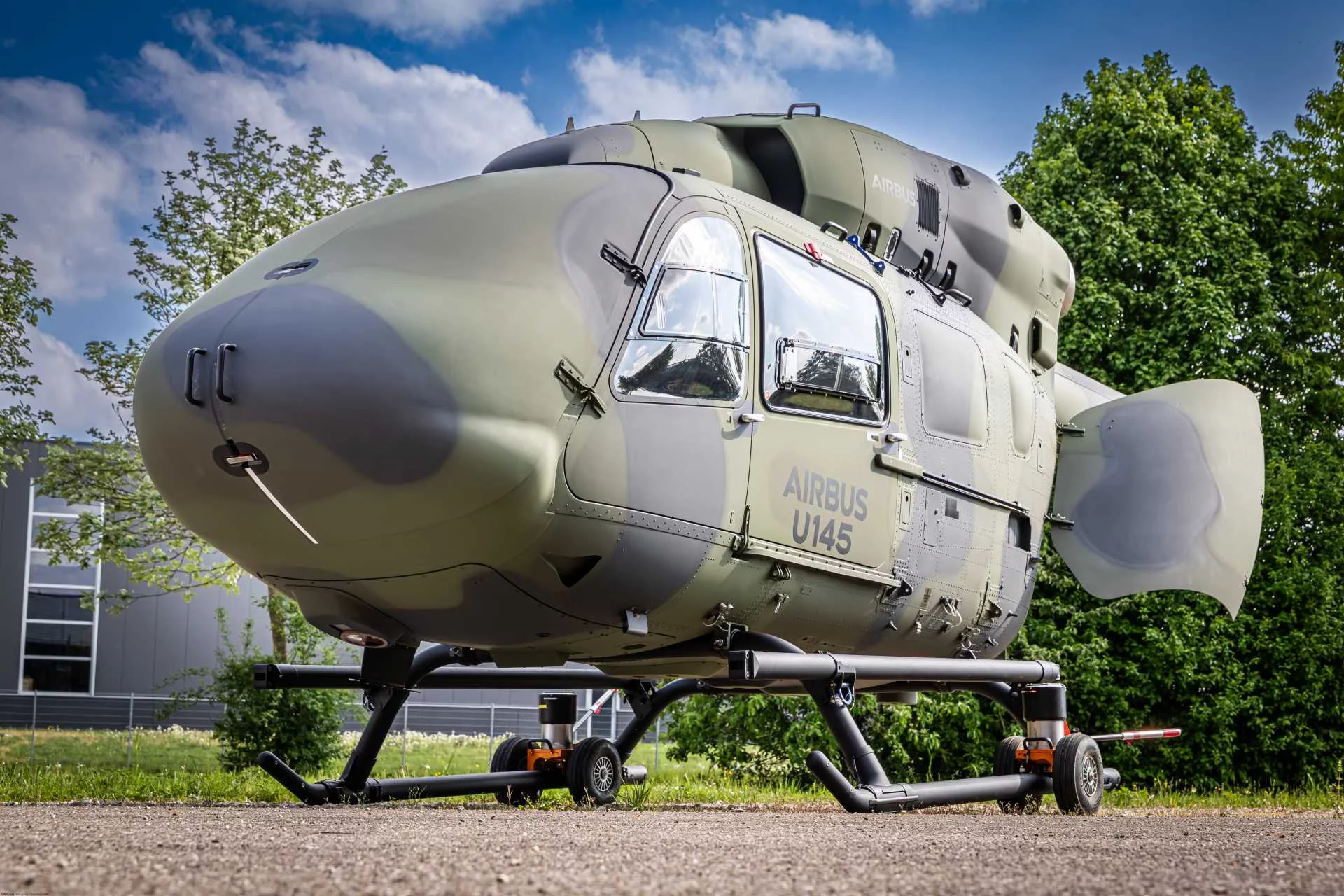
Airbus Develops Autonomous U145 Unmanned Helicopter for Military Operations
European aerospace giant Airbus has unveiled its latest innovation in military aviation technology: the U145, an autonomous unmanned helicopter specifically designed for military missions. This groundbreaking aircraft represents a significant leap forward in unmanned aerial systems, capable of performing critical battlefield operations including cargo delivery and medical evacuation without requiring human pilots aboard. The development marks Airbus’s strategic push into the rapidly expanding market for autonomous military vehicles, positioning the company as a key player in the future of defense aviation.
The U145 is built upon a proven platform, leveraging technology and design elements from existing helicopter models to ensure reliability and operational effectiveness. The unmanned system is engineered to operate in hostile environments where manned aircraft would face unacceptable risks to crew safety. By removing the human pilot from the equation, the U145 can undertake missions in contested airspace, under enemy fire, or in conditions that would be too dangerous for traditional helicopter operations. This capability is particularly crucial for medical evacuation missions, where the speed of casualty extraction can mean the difference between life and death for wounded soldiers.
The cargo delivery capabilities of the U145 address one of the most persistent challenges facing modern military logistics. Supply chain operations in combat zones have historically been vulnerable to ambush and attack, putting pilots and crew at constant risk. During conflicts in Afghanistan and Iraq, numerous helicopter crews lost their lives during resupply missions to remote outposts. The U145’s autonomous operation eliminates this human cost while maintaining the ability to deliver essential supplies including ammunition, food, water, and medical equipment to forward-deployed units. Military analysts estimate that autonomous resupply systems could reduce logistics-related casualties by as much as 70 percent in high-threat environments.
The medical evacuation function, commonly known as MEDEVAC or CASEVAC, represents perhaps the most compelling use case for the U145 platform. The so-called “golden hour” principle in combat medicine holds that wounded soldiers have significantly higher survival rates if they receive advanced medical care within 60 minutes of injury. Traditional MEDEVAC helicopters, while effective, require crews willing to fly into dangerous situations, and mission delays often occur when conditions are deemed too hazardous. An autonomous system like the U145 can be dispatched immediately regardless of threat level, potentially saving lives that would otherwise be lost to operational delays.
Airbus’s entry into the autonomous military helicopter market comes amid intensifying global competition in defense technology. The United States has been developing similar systems through various programs, while China has made substantial investments in unmanned military aviation. The ongoing conflict in Ukraine has dramatically demonstrated the value of unmanned systems in modern warfare, with drones of all sizes playing decisive roles in combat operations. This real-world validation has accelerated military procurement timelines worldwide, with defense ministries eager to acquire autonomous capabilities before their adversaries gain technological advantages.
The technical challenges of creating a fully autonomous helicopter are substantial, requiring sophisticated artificial intelligence systems capable of navigation, obstacle avoidance, landing zone assessment, and emergency response without human intervention. Unlike fixed-wing drones, helicopters operate in a more complex aerodynamic environment and must be capable of precise hovering and landing in confined spaces. Airbus has invested heavily in sensor fusion technology, combining radar, lidar, and optical systems to give the U145 comprehensive situational awareness. The aircraft’s flight control software must also be resilient against electronic warfare and cyber attacks, as enemy forces will certainly attempt to disable or hijack autonomous systems.
Looking ahead, the U145 program signals a broader transformation in military aviation that extends beyond Airbus. Defense experts predict that autonomous aircraft will comprise an increasingly large proportion of military helicopter fleets over the coming decades. These systems will not entirely replace manned aircraft but will instead complement them, taking over the most dangerous missions while human pilots focus on operations requiring judgment and flexibility that current AI cannot replicate. For Airbus, the U145 represents both a technological achievement and a strategic investment in the future of defense aviation, ensuring the company remains competitive as military requirements continue to evolve toward autonomous solutions.