
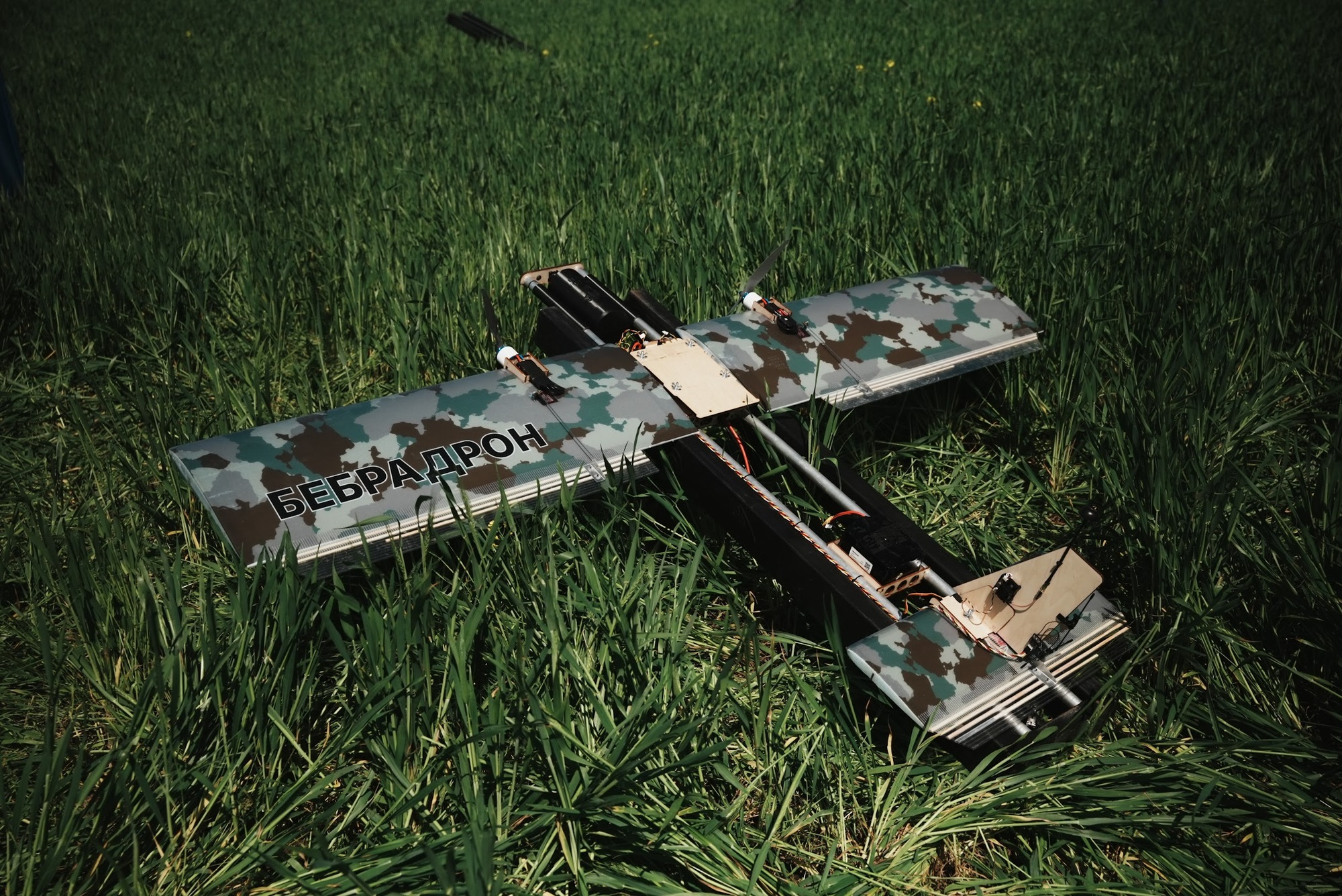
Ukrainian Bebradron UAV Upgraded with Automatic Catapult Launch and Advanced Communication System
The Ukrainian unmanned aerial vehicle “Bebradron” has received significant technical upgrades, including an automatic catapult launch system and an enhanced communication suite, according to recent reports from Ukrainian defense sources. These modifications represent a continued effort by Ukraine’s domestic defense industry to improve the operational capabilities of its drone fleet amid the ongoing conflict. In its baseline configuration, the Bebradron is capable of delivering payloads weighing up to 7.5 kilograms, making it a versatile platform for various military applications including reconnaissance, surveillance, and payload delivery missions.
The introduction of an automatic catapult launch system marks a substantial improvement in the drone’s deployment flexibility. Traditional hand-launched or runway-dependent drones often require specific conditions and trained personnel for successful takeoffs. With the new auto-launch catapult, operators can deploy the Bebradron from confined spaces, rough terrain, or positions where manual launching would be impractical or dangerous. This capability is particularly valuable in frontline conditions where Ukrainian forces must maintain mobility and minimize their exposure to enemy fire during drone operations. The automated nature of the system also reduces the margin for human error during the critical launch phase.
The upgraded communication system represents another critical enhancement to the Bebradron platform. Modern warfare increasingly depends on reliable, secure, and long-range communication links between unmanned systems and their operators. The new communication suite likely incorporates improved encryption protocols, extended operational range, and enhanced resistance to electronic warfare measures. Russian forces have deployed sophisticated jamming and electronic countermeasure systems throughout the conflict zone, making communication resilience a top priority for Ukrainian drone developers. The ability to maintain stable control links even in contested electromagnetic environments can mean the difference between mission success and the loss of valuable equipment.
Ukraine’s drone industry has experienced remarkable growth since the beginning of the full-scale invasion in February 2022. What began as a collection of small workshops and volunteer initiatives has evolved into a sophisticated network of manufacturers producing thousands of unmanned systems monthly. The country has become one of the world’s largest drone producers by volume, with designs ranging from small first-person-view quadcopters to larger fixed-wing platforms like the Bebradron. This rapid development has been driven by necessity, as drones have proven to be among the most cost-effective and versatile weapons systems in modern combat, capable of destroying equipment worth many times their production cost.
The 7.5-kilogram payload capacity of the Bebradron places it in a category of medium-lift tactical drones that can serve multiple roles on the battlefield. This payload allowance is sufficient to carry various reconnaissance equipment, including electro-optical sensors, thermal imaging cameras, and communication relay packages. Additionally, the drone can be configured for strike missions, carrying explosive payloads capable of targeting enemy personnel, vehicles, and fortified positions. The versatility of such platforms has made them invaluable to Ukrainian forces, who often repurpose the same drone types for different missions depending on tactical requirements and available munitions.
The ongoing technological competition between Ukrainian and Russian forces has accelerated innovation on both sides of the conflict. Ukraine has benefited from significant international support, including training programs, component supplies, and technology sharing arrangements with Western partners. However, much of the innovation in Ukrainian drone systems comes from domestic engineers and programmers who have adapted commercial technologies for military use. The integration of artificial intelligence for navigation, target recognition, and autonomous flight modes represents the next frontier in this technological race, with both nations working to develop systems that can operate effectively even when communication links are disrupted.
Looking ahead, upgrades like those implemented on the Bebradron are likely to become standard features across Ukraine’s expanding drone arsenal. The combination of improved launch systems, enhanced communications, and capable payload delivery represents a maturation of Ukrainian unmanned systems from improvised solutions to purpose-built military platforms. As the conflict continues, these technological advancements will play an increasingly important role in shaping battlefield outcomes, with both sides recognizing that dominance in the drone domain has become as crucial as traditional air superiority in modern warfare.