
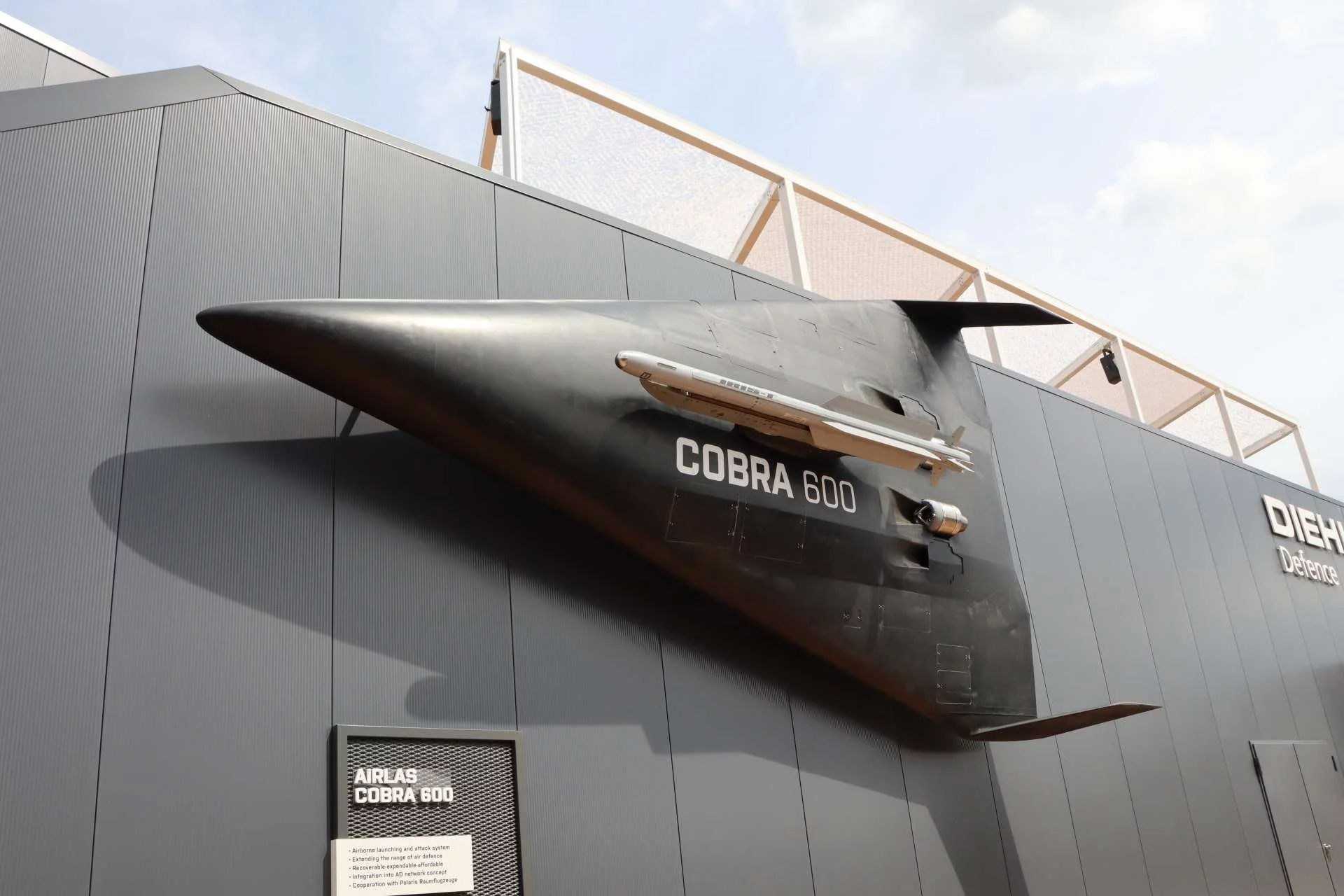
Germany Unveils Cobra 600 Drone Capable of Launching IRIS-T Missiles at Ranges Up to 400 Kilometers
Germany has officially presented its latest military innovation, the Cobra 600 unmanned aerial vehicle, designed specifically to launch IRIS-T air-to-air missiles at distances reaching up to 400 kilometers. This groundbreaking development represents a significant advancement in modern air defense capabilities, allowing military forces to engage aerial threats far beyond traditional defensive positions. The presentation marks a new chapter in Germany’s commitment to developing cutting-edge defense technologies that could reshape aerial combat doctrines across NATO alliance members.
The Cobra 600 system is engineered to operate as a missile carrier that can deploy the highly effective IRIS-T missiles while remaining safely distant from enemy air defense systems. This tactical advantage means that operators can engage incoming threats without exposing manned aircraft or ground-based launch systems to retaliatory fire. The concept represents a shift in military thinking, where unmanned platforms increasingly take on roles that were previously reserved for piloted aircraft or fixed installations, dramatically reducing the risk to human personnel while extending operational reach.
The IRIS-T missile system, which stands for Infra-Red Imaging System Tail/Thrust Vector-Controlled, has become one of the most successful European air defense solutions in recent years. Originally developed by a consortium of nations led by Germany, the missile entered service in 2005 and has since proven its effectiveness in multiple configurations. The ground-launched variant, IRIS-T SLM, gained international prominence following its deployment to Ukraine in 2022, where it demonstrated exceptional performance against Russian cruise missiles and drones. The integration of this proven missile system with an advanced drone platform creates a highly flexible and lethal combination that could significantly enhance defensive capabilities on modern battlefields.
The technical specifications of the Cobra 600 reflect Germany’s ambitious approach to unmanned combat systems. With an operational range of 400 kilometers, the drone can effectively project air defense capabilities deep into contested airspace or extend protective coverage over vast areas. This extended range capability addresses one of the key limitations of traditional ground-based air defense systems, which are constrained by radar horizons and missile flight distances. By launching missiles from an aerial platform positioned optimally for engagement, the system can intercept threats at greater distances and from more favorable angles, potentially improving interception success rates.
Defense analysts have noted that the Cobra 600 concept aligns with broader trends in military technology development, where autonomous and semi-autonomous systems are increasingly taking center stage. The use of drones as missile carriers represents a cost-effective alternative to manned fighter aircraft for certain defensive missions. While a modern fighter jet costs tens of millions of dollars and requires extensive pilot training, drone systems like the Cobra 600 can potentially accomplish similar objectives at a fraction of the cost and without risking highly trained aircrew. This economic calculation has become particularly relevant as military budgets face pressure and the demand for effective air defense solutions continues to grow globally.
Germany’s defense industry has been undergoing a significant transformation since the announcement of the historic 100 billion euro special fund for military modernization following Russia’s invasion of Ukraine in February 2022. This massive investment has accelerated numerous development programs and demonstrated Berlin’s renewed commitment to strengthening its armed forces after decades of relatively modest defense spending. The Cobra 600 project exemplifies the type of innovative systems that German defense contractors are now developing to meet emerging threats and maintain technological superiority in an increasingly complex security environment.
The implications of the Cobra 600 system extend beyond German borders, as NATO allies closely monitor developments that could enhance collective defense capabilities. The interoperability of such systems within the alliance framework remains a crucial consideration, and successful German innovations often find their way into broader European defense cooperation projects. As military planners continue to adapt to the lessons learned from recent conflicts, including the extensive use of drones in Ukraine, systems that combine unmanned platforms with proven missile technology represent a logical evolution in air defense architecture. The Cobra 600 demonstration signals Germany’s intention to remain at the forefront of this technological revolution in military affairs.