
Blue Origin Aims to Resume New Glenn Launches This Year Despite Launch Complex Damage Dispute with NASA
Blue Origin, the aerospace company founded by Amazon billionaire Jeff Bezos, has announced ambitious plans to resume flights of its massive New Glenn rocket before the end of 2025, following a dramatic explosion that damaged critical launch infrastructure earlier this year. The company’s optimistic timeline, however, appears to be at odds with assessments from NASA officials, creating an unusual public disagreement between the space agency and one of its key commercial partners about the true extent of the damage and the realistic timeline for repairs.
The incident in question occurred during what was otherwise considered a largely successful maiden flight of the New Glenn rocket. While the vehicle’s upper stage successfully reached orbit and deployed its payload, the first stage booster experienced a catastrophic failure during its attempted landing on a drone ship in the Atlantic Ocean. The explosion not only destroyed the booster but also caused significant damage to the launch complex at Cape Canaveral, Florida, raising questions about how quickly Blue Origin can return to flight operations.
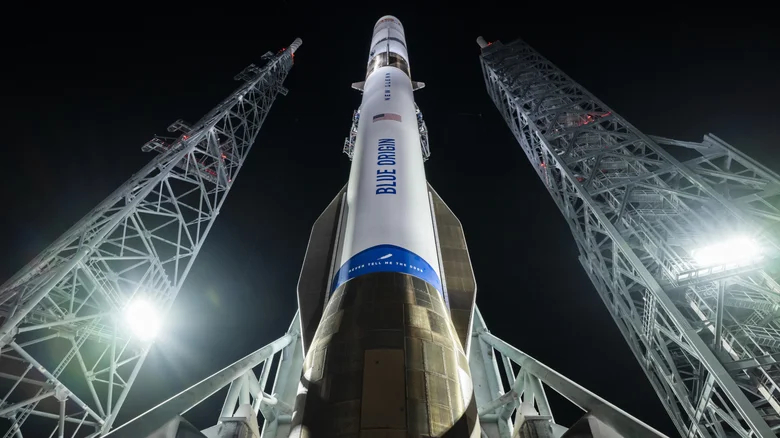
Blue Origin executives have maintained a confident stance regarding their recovery timeline, stating that repairs to Launch Complex 36 are proceeding on schedule and that the company expects to conduct additional New Glenn flights before 2025 concludes. This aggressive schedule reflects the company’s determination to establish itself as a major player in the commercial launch market, where it faces fierce competition from SpaceX’s dominant Falcon 9 and Falcon Heavy rockets. The New Glenn, standing at approximately 320 feet tall with a reusable first stage, represents Blue Origin’s most ambitious project to date and is central to the company’s long-term business strategy.
NASA officials, however, have offered a more cautious assessment of the situation. Agency representatives have indicated that the damage to the launch infrastructure may be more extensive than Blue Origin has publicly acknowledged, potentially requiring a longer repair timeline. This divergence in assessments is particularly significant given that NASA has contracted Blue Origin for several important missions, including launching components of the agency’s Mars Sample Return program and other deep space exploration initiatives. The space agency has invested billions of dollars in developing commercial launch capabilities and maintains a vested interest in accurate assessments of contractor readiness.
The disagreement between Blue Origin and NASA reflects broader tensions that sometimes emerge in the new era of commercial spaceflight partnerships. Unlike the traditional cost-plus contracting model that dominated the Space Shuttle era, modern commercial space agreements place greater responsibility on private companies to manage their own timelines and technical challenges. This shift has accelerated innovation and reduced costs but can also create situations where commercial optimism clashes with government oversight requirements. Historical precedents suggest that launch complex repairs following explosions typically require twelve to eighteen months, though the specific circumstances of each incident vary considerably.
Blue Origin’s New Glenn program has been in development for over a decade, with the company investing billions of dollars in the rocket’s design, manufacturing facilities in Huntsville, Alabama, and launch infrastructure in Florida. The vehicle is powered by seven BE-4 engines on its first stage, the same engines that Blue Origin supplies to United Launch Alliance for their Vulcan rocket. The company had hoped that a successful debut would help it secure additional commercial and government contracts, positioning New Glenn as a viable alternative to SpaceX’s offerings for customers seeking launch services for heavy payloads to various orbits.
Industry analysts note that the stakes for Blue Origin extend beyond any single mission or contract. The company has long been criticized for moving too slowly compared to SpaceX, which has revolutionized the industry with rapid iteration and frequent launches. Jeff Bezos has reportedly invested over $10 billion of his personal fortune into Blue Origin, and investors and observers are eager to see returns on that investment. Successfully returning New Glenn to flight quickly would demonstrate the company’s resilience and operational capabilities, while extended delays could further cement perceptions of Blue Origin as a slower, more cautious organization.
As both Blue Origin and NASA continue their assessments of the launch complex damage, the broader space industry watches closely. The outcome of this situation will likely influence future commercial space partnerships and may prompt discussions about transparency and communication standards between government agencies and their private sector contractors. For now, the path forward remains uncertain, with Blue Origin pushing for an aggressive return to flight and NASA urging a more measured approach to ensure safety and mission success for the critical payloads awaiting launch aboard New Glenn.