
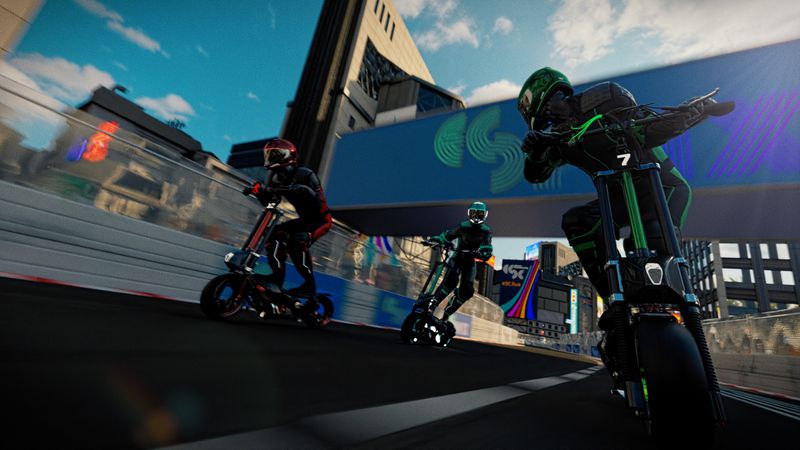
A New Era of Racing: Formula 1 Driver Takes the Wheel of an Electric Scooter
The world of motorsport is constantly evolving, and a new chapter is being written with the emergence of electric scooter racing as a legitimate competitive discipline. In a surprising move that highlights the growing intersection between traditional motorsport and sustainable urban mobility, a Formula 1 driver has been spotted testing an electric scooter designed specifically for professional racing. This development signals a significant shift in how we perceive both competitive racing and electric micro-mobility vehicles, traditionally seen as convenient city transport rather than high-performance machines.
The newly announced racing series is set to launch in 2021, featuring purpose-built electric scooters capable of reaching speeds of 100 kilometers per hour. Unlike traditional motorsport events held on dedicated circuits, these races will take place within the urban infrastructure of several major cities worldwide, utilizing existing streets and pathways transformed into temporary racing tracks. This innovative approach not only reduces the environmental footprint associated with building permanent racing facilities but also brings the excitement of motorsport directly to urban populations who might otherwise never experience competitive racing firsthand.
The involvement of established Formula 1 talent in this nascent racing category lends considerable credibility to what might otherwise be dismissed as a novelty. Formula 1 drivers are among the most skilled and highly trained athletes in motorsport, with reaction times measured in milliseconds and an intimate understanding of vehicle dynamics, racing lines, and competitive strategy. Their participation suggests that electric scooter racing demands genuine skill and presents authentic competitive challenges, rather than being merely a marketing gimmick or publicity stunt designed to capitalize on the electric mobility trend.
The broader context of this development reflects the profound transformation occurring across the transportation and motorsport industries. Electric vehicle technology has advanced dramatically over the past decade, with improvements in battery density, motor efficiency, and power management enabling performance levels that were unthinkable just years ago. This technological progress has already spawned Formula E, the all-electric single-seater racing championship that launched in 2014 and has since attracted major automotive manufacturers including Mercedes-Benz, Porsche, and Jaguar. Electric scooter racing represents the latest extension of this electrification trend into even more accessible vehicle categories.
Urban micro-mobility has experienced explosive growth in recent years, with electric scooters becoming a common sight in cities across Europe, North America, and Asia. Companies like Lime, Bird, and Tier have deployed millions of shared electric scooters, fundamentally changing how people navigate urban environments for short-distance trips. The racing series capitalizes on this cultural moment, leveraging widespread familiarity with electric scooters while showcasing the technology’s performance potential far beyond casual commuting. Racing within city infrastructure also serves a practical purpose, demonstrating how urban spaces can be reimagined and adapted for different uses.
The technical specifications of racing-grade electric scooters differ substantially from their consumer counterparts. While typical shared scooters are limited to speeds between 20-25 kilometers per hour for safety reasons, purpose-built racing machines feature enhanced motors, larger battery packs, upgraded suspension systems, and specialized tires designed for cornering at high speeds. The 100 km/h capability announced for this series places these vehicles in an entirely different performance category, requiring riders to wear full protective gear similar to motorcycle racers and demanding skills that far exceed casual scooter operation.
Looking ahead, the launch of professional electric scooter racing could have significant implications for urban transportation policy, vehicle development, and motorsport culture. Success in this arena might accelerate the development of higher-performance consumer electric scooters, influence urban planning decisions regarding dedicated micro-mobility infrastructure, and attract a new generation of motorsport fans who connect more readily with accessible electric vehicles than with exotic supercars. As cities worldwide grapple with congestion, pollution, and climate change, racing series that celebrate sustainable transportation technology may ultimately prove more relevant to modern audiences than traditional petroleum-powered motorsport.