
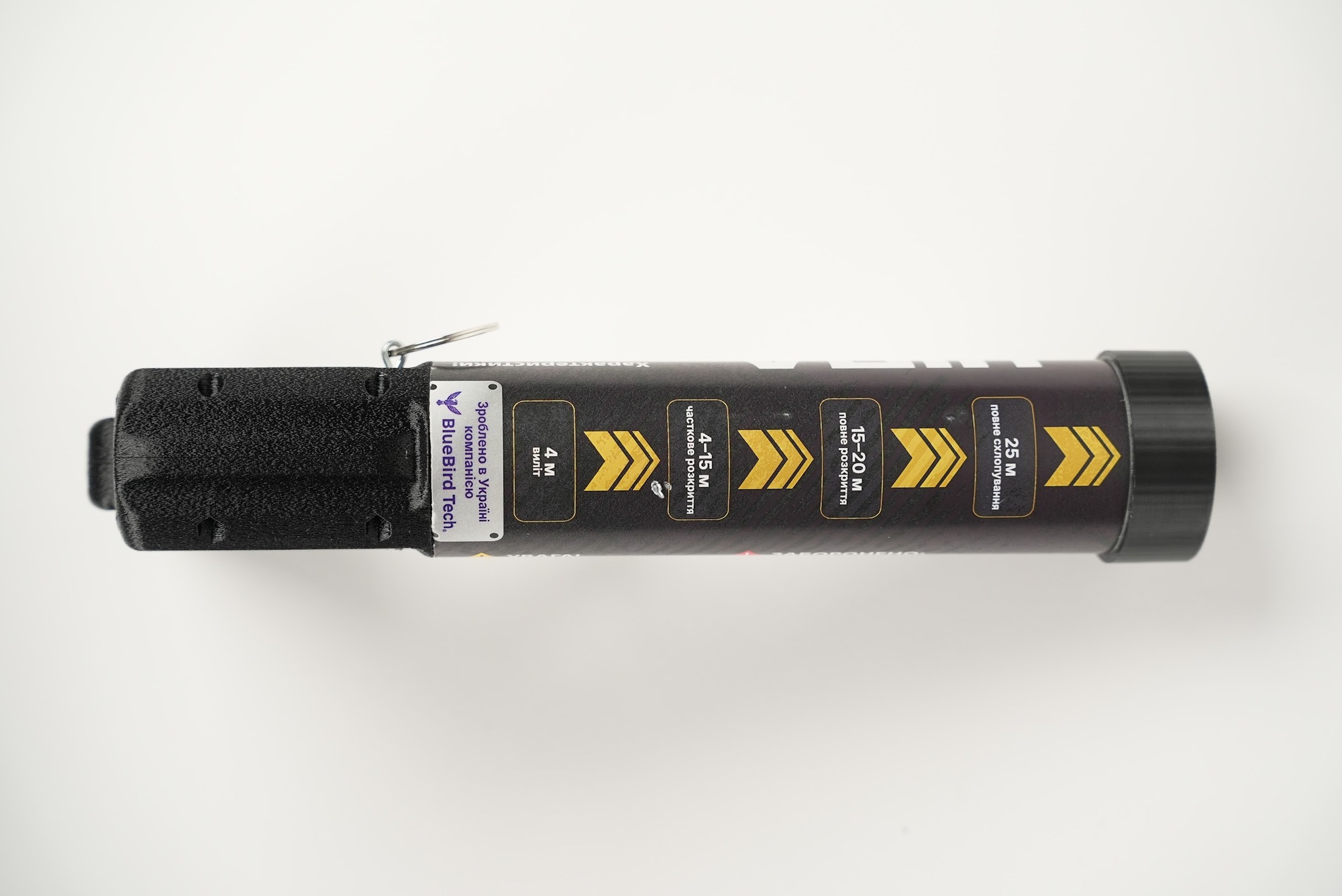
BlueBird Tech Launches Mass Production of ‘Chipa’ Net Launchers Capable of Intercepting Drones at 25 Meters
Ukrainian defense technology company BlueBird Tech has announced the commencement of mass production of its innovative anti-drone net launcher system, dubbed ‘Chipa.’ The company has set an ambitious target of manufacturing more than 500 interceptor nets per month, marking a significant step forward in Ukraine’s domestic counter-unmanned aerial systems (C-UAS) capabilities. The portable device is designed to intercept first-person view (FPV) drones at distances of up to 25 meters, providing ground forces with a cost-effective and practical solution for neutralizing one of the most pervasive threats on the modern battlefield.
The development of net-based drone interception systems represents a growing trend in counter-drone technology worldwide. Unlike electronic warfare systems that jam drone signals or expensive missile-based solutions, net launchers offer a kinetic, low-cost alternative that physically captures enemy UAVs without the need for sophisticated targeting systems. The ‘Chipa’ system joins a family of similar devices being developed globally, but its Ukrainian origin means it has been designed with direct input from soldiers experiencing daily drone attacks on the front lines. This battlefield-driven innovation cycle has become a hallmark of Ukraine’s defense technology sector since the full-scale invasion began in February 2022.
FPV drones have emerged as one of the defining weapons of the ongoing conflict in Ukraine, with both sides deploying thousands of these small, agile aircraft for reconnaissance, targeting, and direct attacks on personnel and equipment. These drones, often assembled from commercial components and fitted with explosive payloads, can cost as little as a few hundred dollars to produce, making them an asymmetric threat that is difficult to counter economically. Traditional air defense systems designed to intercept missiles and aircraft are prohibitively expensive to use against such cheap targets, creating an urgent need for proportional countermeasures. The ‘Chipa’ net launcher addresses this gap by providing infantry units with an affordable tool that requires minimal training to operate.
BlueBird Tech’s decision to scale production to over 500 units monthly reflects the enormous demand for such systems among Ukrainian military formations. The 25-meter engagement range, while limited compared to electronic warfare systems or interceptor drones, is specifically calibrated for close-quarters defense scenarios where FPV drones pose the greatest threat to individual soldiers and small units. Military analysts note that these situations often occur in trench warfare conditions, urban combat environments, and during evacuation operations where electronic countermeasures may not be available or practical. The physical capture of enemy drones also offers intelligence value, allowing Ukrainian forces to analyze enemy technology and potentially recover unexpended munitions.
The Ukrainian defense technology ecosystem has undergone remarkable transformation since the beginning of the full-scale war, with dozens of startups and established companies pivoting to military production. This domestic innovation has been crucial in supplementing foreign military aid and developing solutions tailored to specific battlefield conditions. Companies like BlueBird Tech operate in close collaboration with military units, receiving direct feedback that accelerates product development cycles from years to months or even weeks. The ‘Chipa’ system exemplifies this approach, having reportedly undergone multiple iterations based on field testing and soldier input before entering mass production.
Counter-drone warfare has become a critical focus for militaries worldwide as the proliferation of cheap, capable UAVs threatens to reshape conventional military operations. NATO countries, observing the conflict in Ukraine, have accelerated their own C-UAS programs and are closely studying the effectiveness of various approaches. Net-based systems like ‘Chipa’ represent just one layer of what experts describe as a necessary multi-layered defense architecture, combining electronic warfare, kinetic interceptors, directed energy weapons, and physical barriers. The lessons learned in Ukraine are already influencing procurement decisions and doctrinal developments in defense establishments from Washington to Warsaw.
As BlueBird Tech ramps up production, the company faces the dual challenges of maintaining quality control while meeting urgent battlefield demands. The success of the ‘Chipa’ program could establish a model for other Ukrainian defense manufacturers seeking to scale innovative solutions rapidly. With drone warfare showing no signs of diminishing in intensity, the race between offensive UAV capabilities and defensive countermeasures continues to drive innovation on both sides of the conflict, with significant implications for the future of warfare globally.