
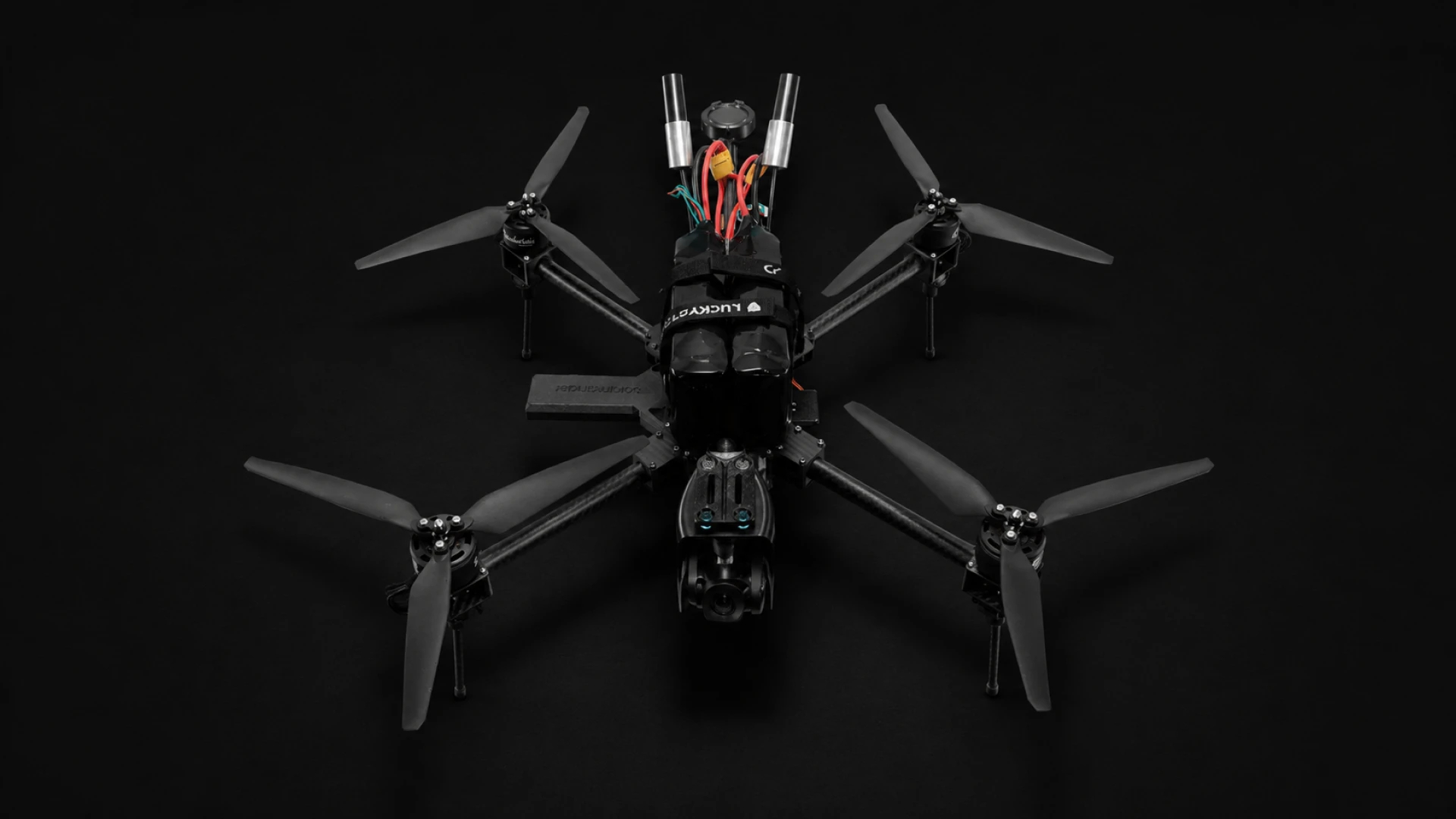
Ukrainian Lucky Strike-2.1 Drone Receives GPS-Independent Navigation System
Ukraine’s defense technology sector has achieved another significant milestone in its ongoing drone warfare innovation with the announcement that the Lucky Strike-2.1 unmanned aerial vehicle has been equipped with an advanced navigation system capable of operating without relying on GPS signals. This development represents a crucial tactical advantage on the modern battlefield, where electronic warfare and signal jamming have become increasingly sophisticated threats to military operations.
The Lucky Strike-2.1 drone, developed by Ukrainian engineers and manufacturers, has emerged as a versatile combat platform capable of delivering up to three munitions in a single flight mission. This multi-payload capability significantly enhances the aircraft’s operational efficiency, allowing Ukrainian forces to engage multiple targets or deliver concentrated strikes without requiring additional sorties. The drone has been designed specifically to meet the demanding requirements of the ongoing conflict, where adaptability and reliability are paramount considerations.
The integration of GPS-independent navigation technology addresses one of the most pressing challenges facing drone operators in contemporary warfare. Russian forces have deployed extensive electronic warfare capabilities along the front lines, including sophisticated jamming systems designed to disrupt GPS signals and render conventional drones ineffective or difficult to control. By developing alternative navigation solutions, Ukrainian engineers have effectively neutralized a significant portion of this electronic countermeasure advantage, ensuring that the Lucky Strike-2.1 can continue to operate even in heavily contested electromagnetic environments.
GPS jamming and spoofing have become standard tactics in modern conflicts, with military forces worldwide investing heavily in both offensive and defensive electronic warfare capabilities. The technology works by either overwhelming GPS receivers with noise or by transmitting false signals that mislead navigation systems. Ukraine’s response to this threat demonstrates the rapid innovation cycle that has characterized the country’s defense industry since the full-scale invasion began in February 2022, with engineers often developing countermeasures within months of identifying new battlefield challenges.
The alternative navigation systems employed in modern military drones typically include a combination of inertial navigation, terrain mapping, visual recognition, and celestial navigation technologies. While specific details about the Lucky Strike-2.1’s navigation suite remain classified for operational security reasons, such systems generally use accelerometers and gyroscopes to track movement, combined with pre-loaded terrain data and optical sensors that can identify landmarks and adjust course accordingly. Some advanced systems also incorporate artificial intelligence algorithms that enable the drone to make autonomous navigation decisions based on real-time environmental analysis.
Ukraine has emerged as a global leader in drone warfare innovation, driven by necessity and supported by a robust domestic technology sector. The country’s drone manufacturers have produced thousands of unmanned aerial vehicles ranging from small reconnaissance platforms to larger strike-capable systems like the Lucky Strike series. This indigenous production capability has proven essential as Ukraine seeks to maintain technological parity with its adversary while reducing dependence on foreign military aid. The development of GPS-independent navigation represents the latest chapter in this ongoing technological arms race.
Military analysts have noted that the proliferation of such advanced drone capabilities is likely to influence future conflict scenarios worldwide. The lessons learned from the Ukraine conflict, including the importance of electronic warfare resilience and multi-payload delivery systems, are being studied by defense establishments globally. The Lucky Strike-2.1’s combination of GPS-independent navigation and triple-munition capacity positions it as a particularly effective platform for precision strike missions in contested environments, potentially serving as a model for future drone development programs in other nations.
As the conflict continues, Ukrainian forces are expected to deploy the upgraded Lucky Strike-2.1 drones in increasing numbers along the front lines. The system’s enhanced survivability against electronic countermeasures, combined with its significant strike capability, makes it a valuable asset for both offensive operations and defensive interdiction missions. Defense experts anticipate that this technological advancement will prompt further escalation in the electronic warfare domain, as opposing forces seek new methods to counter the improved navigation systems.