
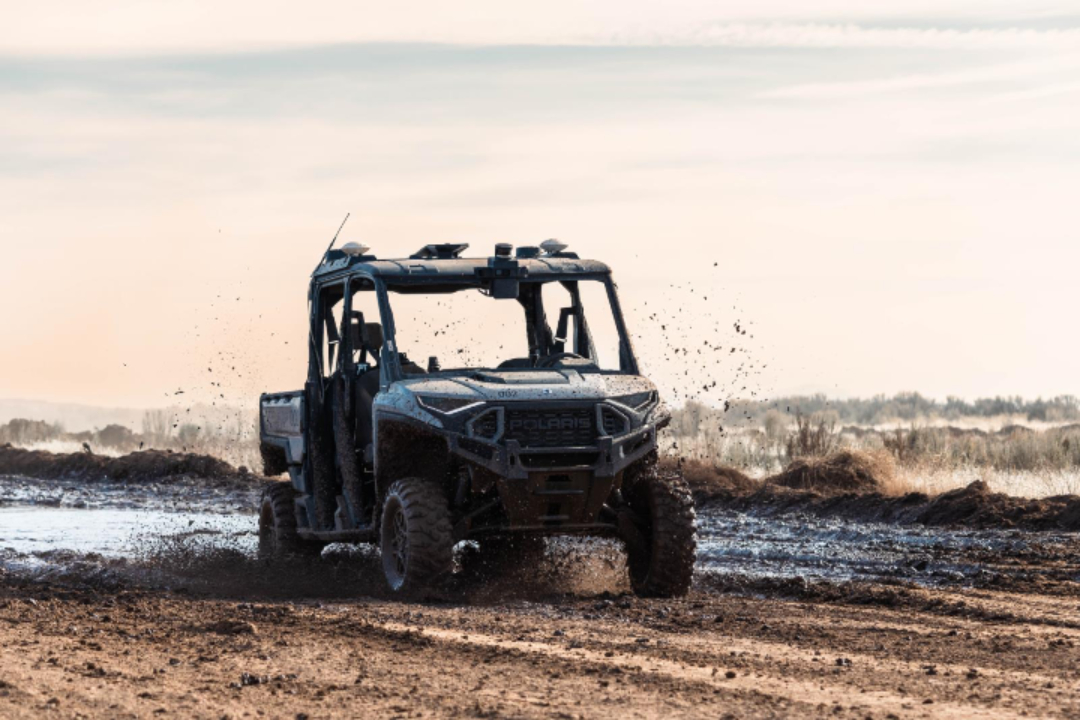
Over 100 American Forterra Autonomous Vehicles Now Deployed on Ukrainian Front Lines
American robotics company Forterra has announced a significant milestone in the deployment of its autonomous ground vehicles in Ukraine, revealing that more than 100 of its unmanned systems are now actively operating in the conflict zone. The California-based defense technology firm disclosed that these machines have already completed over 1,100 missions supporting Ukrainian forces, marking one of the largest deployments of Western autonomous ground vehicles in an active combat environment.
The deployment represents a substantial expansion of unmanned ground vehicle technology in modern warfare, with Forterra’s systems being used primarily for logistics, supply delivery, and casualty evacuation missions. These autonomous vehicles are designed to operate in dangerous environments where sending human drivers would pose unacceptable risks, particularly in areas subject to artillery fire, drone attacks, or mine threats. The company’s technology builds on years of development originally focused on commercial and industrial applications before being adapted for military use.
Forterra, formerly known as Pronto AI, has been rapidly expanding its defense capabilities since the outbreak of the full-scale conflict in Ukraine in February 2022. The company specializes in autonomous driving software that can be integrated into various vehicle platforms, allowing conventional trucks and utility vehicles to operate without human drivers. This flexibility has proven crucial in Ukraine, where the ability to quickly convert existing vehicle fleets into autonomous platforms provides significant tactical advantages without requiring entirely new vehicle acquisitions.
The use of unmanned ground vehicles in Ukraine reflects a broader transformation in military logistics and battlefield operations. Traditional supply lines have become increasingly vulnerable to long-range precision strikes, surveillance drones, and artillery systems that can target vehicles moving through known routes. By removing human drivers from these dangerous missions, autonomous vehicles significantly reduce the risk of casualties while maintaining essential supply chains to forward positions. Ukrainian forces have been particularly innovative in adopting new technologies throughout the conflict, rapidly integrating everything from commercial drones to advanced Western weapons systems.
Industry experts note that the Ukrainian battlefield has become an unprecedented testing ground for autonomous military technology. The high-intensity combat environment provides real-world data and operational experience that would be impossible to replicate in controlled testing scenarios. For companies like Forterra, this deployment offers invaluable insights into how their systems perform under extreme stress, including electronic warfare interference, GPS jamming, and the unpredictable conditions of active combat zones. The lessons learned in Ukraine are likely to shape the development of autonomous military vehicles for decades to come.
The deployment also highlights the growing role of American defense technology companies in supporting Ukraine’s war effort. While much attention has focused on high-profile weapons systems like HIMARS rocket launchers and Abrams tanks, the quieter contribution of autonomous logistics vehicles addresses a critical and often overlooked aspect of modern warfare: keeping front-line units supplied with ammunition, food, medical supplies, and equipment. Military historians have long emphasized that wars are won as much through logistics as through combat power, and autonomous vehicles represent a potential revolution in how armies sustain their forces.
Looking ahead, the success of Forterra’s deployment in Ukraine is likely to accelerate interest in autonomous ground vehicles among NATO militaries and other Western armed forces. The United States Army has been investing heavily in robotic and autonomous systems through programs like the Robotic Combat Vehicle initiative, and the operational data from Ukraine will inform future procurement decisions. As the technology matures and proves its reliability in combat conditions, experts predict that autonomous logistics vehicles will become standard equipment in modern armies, fundamentally changing how military operations are conducted and reducing the human cost of maintaining supply lines in contested environments.